Inventory inaccuracies occur when physical inventory and system records no longer match. The most common causes are manual data entry, inconsistent barcode scanning, disconnected warehouse systems, poor inventory visibility, and a lack of standardized AIDC processes across facilities. Most times, it is not caused by outdated hardware and buying new equipment will not solve the problem.
What Is the True Cost of Inventory Inaccuracies for Operations?
Few warehouse problems have a bigger impact on productivity than inaccurate inventory. When teams can't trust inventory data, picking slows down, stockouts increase, orders are delayed, and customers receive the wrong products.
The good news is that most inventory inaccuracies are preventable. Understanding what's causing them is the first step toward building a more accurate, efficient and scalable distribution operation.
Why Does Inventory Accuracy Break at the Handoffs?
Inventory accuracy depends on product movement being captured correctly. In a distribution center, every handoff is a product movement that can affect inventory accuracy.
There are many possible breakpoints:
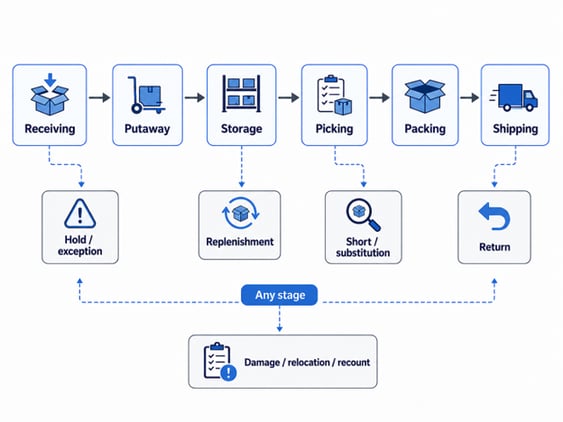
The problem starts when physical movement happens, but the tracking system update does not. That causes a gap between system inventory and floor reality. Let’s take a closer look at the reasons why accurate inventory counts can break down.
Cause #1: Manual Data Entry
Manual entry, rather than automated data collection, is one of the most common causes of inventory inaccuracy because every typed update adds risk.
Manual entry can affect:
- SKUs
- Quantities
- Locations
- Lot numbers
- Order numbers
- Inventory status
Simple mistakes in manual entry and small errors spread quickly once other teams start making decisions based on bad inventory data.
How do you fix manual entry errors in inventory management?
Reduce the number of places where people have to re-enter inventory information. Start by identifying where inventory data is typed, copied, delayed or corrected later. Then standardize those steps so inventory movement is captured as close to the actual work as possible.
Cause #2: Disconnected Systems
Inventory accuracy breaks down when systems do not update together. One system may show product as available while another shows it as reserved, shipped, returned, damaged or still in transit.
There are many systems that need to connect:
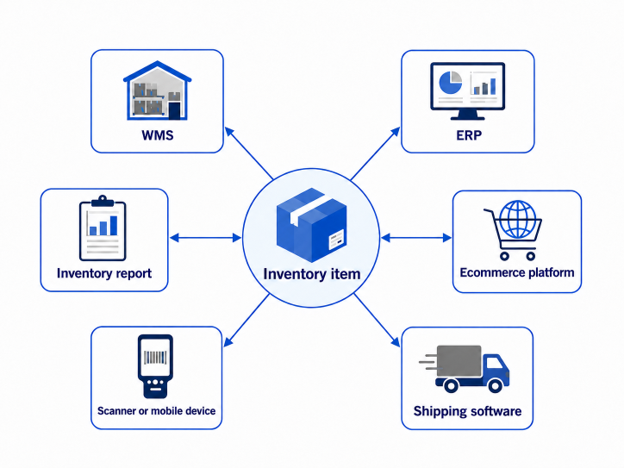
When issues occur, your workers end up filling the gaps by checking one screen against another, exporting reports, and selecting an inventory count that looks right. These gut checks and guesses can lead to errors and inaccuracies.
How do you fix disconnected inventory systems?
Define which system owns each key inventory status. Then ensure there is consistency in how orders, available inventory, reserved inventory, in-transit inventory, returned inventory, damaged inventory and shipped inventory are updated across systems.
Cause #3: Unreliable Scanning
Barcode scanners, mobile computers, printers and labels are supposed to keep inventory movement tied to the system record. When that technology is unreliable, inventory accuracy suffers.
A scanner may fail, misread a label, lose connection or sit out of service too long. A label may print poorly and be unreadable, use inconsistent formatting, or become unreliable, slowing the team down enough that workers develop shortcuts around it, creating errors.
Product keeps moving, but the system record lags behind.
How do you fix scanning issues that affect inventory accuracy?
Make scanning reliability part of your inventory accuracy strategy. Identify where scans fail, labels become unreadable, or devices experience downtime—and understand how employees work around those issues. Then standardize your barcode hardware, labeling, maintenance, repairs, and user workflows so your AIDC technology consistently supports accurate inventory data instead of creating new gaps.
Cause #4: Inconsistent Processes Across Sites
Inventory accuracy suffers when every warehouse follows a different process. If receiving, putaway, picking, cycle counting, returns, or reporting vary by location, data quickly becomes inconsistent. That makes it harder to identify root causes, compare performance, and maintain trusted inventory across the enterprise.
How do you fix multi-site inventory inconsistency?
Compare how each site handles the steps that affect inventory accuracy. Then standardize inventory statuses, location updates, scanning practices, return handling and reporting across locations.
How Standardization Improved Inventory Accuracy Across 58 Facilities
A member of the GO2 AIDC team recently worked with a company to improve its shipping accuracy.
This leading manufacturer with 58 production and distribution facilities was facing the same challenges many multi-site operations experience: unreliable scanner repairs, chronic label shortages, inconsistent vendor support, and no single owner for its AIDC program. The result was inventory inaccuracies, shipping errors, and unnecessary downtime.
GO2 replaced this fragmented approach with a standardized AIDC program across all 58 locations. The company gained one partner for hardware, repairs, supplies, technical support, and lifecycle management—creating consistent processes and accountability across the enterprise.
The results spoke for themselves:
- Shipment accuracy increased from 87% to 99%
- Inventory accuracy improved by more than 15%
- More than $1 million in annual supply cost savings
- All 58 facilities were standardized within 18 months
- Customer leadership described GO2 as "an extension of their IT department."
The takeaway: Inventory accuracy isn't just about better barcode scanners or new technology. It's the result of standardized processes, consistent support, and an AIDC strategy that works the same way across every facility.
The First Step to Solving Inventory Inaccuracies
Inventory inaccuracies usually point to process gaps, not a people problem. Start by finding where the inventory record breaks. Once these gaps are visible, the operation can standardize the steps that matter most and give teams a more reliable way to know what they have, where it is, and what is ready to fulfill.
For a deeper look at why fulfillment systems underperform across multi-site operations, read the full breakdown here.
Share this

What Are the Biggest Ecommerce Fulfillment Challenges and How Do You Fix Them?

AIDC, Barcodes and Digital Information in the Age of AI