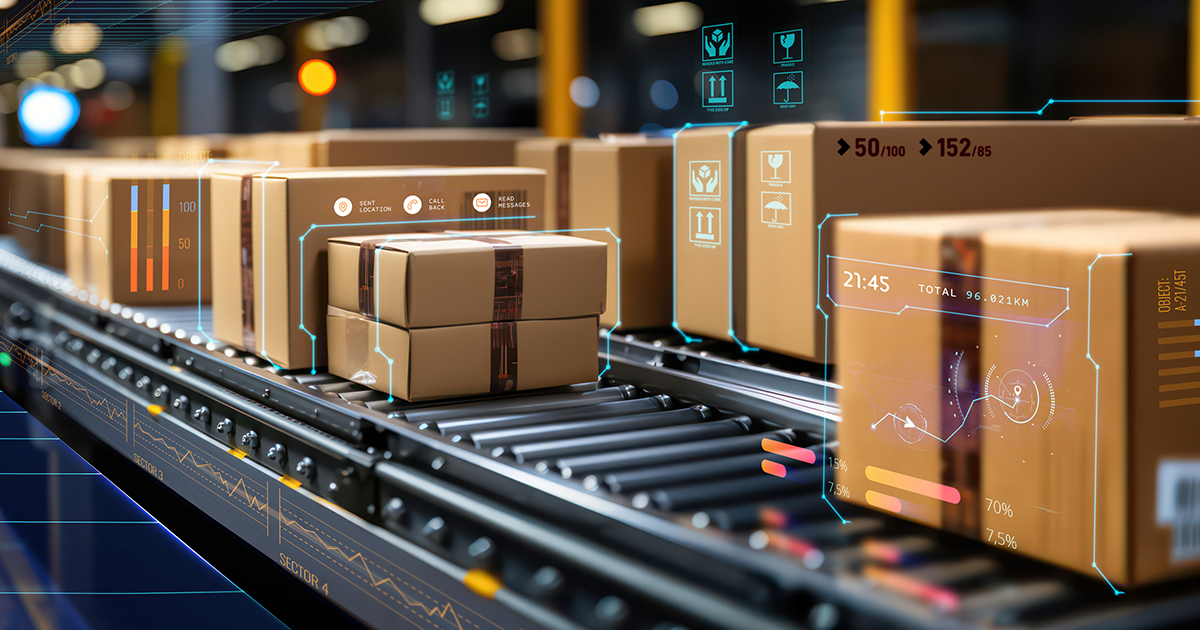
The foundation of the modern supply chain is Automatic Identification and Data Capture (AIDC). At its core, AIDC is all about connecting physical objects, like your inventory and packages, to digital information quickly and efficiently using tools like barcodes and RFID. With AIDC, you can remotely and at scale review, manage and track objects, enabling warehouses to know what they have, where it is and where it’s going.
Today, artificial intelligence (AI) is reshaping how that information is created and used for inventory control and management.
Barcode Scanning, Information Management and AIDC
For supply chains, barcodes were originally invented to be a simple, reliable and inexpensive way to track inventory. Traditional barcode scanning relied heavily on human operators, fixed lighting conditions and clean, well-placed labels. While effective, these systems had limitations. Misreads, missed scans, labor-intensive processes and a lack of real-time insight were all challenges that supply chain managers and warehouses had to overcome.
In addition, once that information is collected, it must be interpreted and used. The goal is to leverage the data for operational efficiency. Many companies have data, but struggle to use it, interpret it, or even identify critical insights. That’s where AI can help.
AI, Barcode Scanning and Inventory Control
AI changes that equation. When combined with modern digital technologies like high-resolution cameras, edge computing and cloud-based software, AI can overcome many of those challenges. Barcode scanning becomes more flexible, more intelligent and far more scalable. For example:
- Smarter Vision-Based Scanning
AI-powered machine vision systems can now read barcodes that traditional scanners struggle with. These systems can:
- Decode damaged, wrinkled or poorly printed barcodes.
- Read codes at extreme angles or from long distances.
- Identify multiple barcodes simultaneously on moving conveyors.
This dramatically reduces exceptions and manual interventions, keeping inventory flowing smoothly.
- Faster, More Accurate Inventory Data
AI can automatically validate the data scanned against expected inventory, shipment data, orders or other profiles. Any problems, such as a mismatched SKU or an unexpected quantity, can be flagged for review. With AI tools in place, supply chain leaders can expect more accurate inventory, fewer picking and shipping errors, and better real-time visibility.
- Less Reliance on Manual Scanning
The continual need for manual scanning can put undue pressure on your team and lead to errors. Autonomous mobile robots (AMRs), drones and fixed vision stations can capture barcode data continuously, allowing human workers to focus on higher-value tasks like quality checks, exception handling and process improvement.
- Predictive and Prescriptive Insights
When barcode data is combined with AI-driven analytics, it becomes more than record. It becomes a tool for forecasting and optimization. For example, AI can predict and automatically flag stockouts or overstock conditions. It can identify and assess bottlenecks in picking and replenishment and automate routing. The result is increased efficiency, faster operations and reduced costs.
Managing the Risks Associated with AI in AIDC
While the benefits are compelling, supply chain leaders must recognize that there are potential risks associated with AI used for AIDC. When AI is implemented poorly, these risks are augmented.
- Over-Reliance on Automation
AI systems are only as good as their training data, oversight and configuration. If a warehouse relies on AI without proper validation and human oversight, errors can propagate quickly, especially in high-volume environments.
- Data Quality and Bias
AI thrives on data and consistency, and there will be some tasks and operations that aren’t suited to AI. Inconsistent labeling practices, outdated or incorrect master data, poorly maintained barcodes, or poorly designed processes can undermine even the most advanced systems. Your AI systems are only as good as the support structure around them.
- Cybersecurity and Data Privacy
As barcode scanning systems become more connected and cloud-enabled, they also become potential targets. Without strong security practices, these connections can be exploited, allowing unauthorized access to inventory data, shipment details, customer information or even operational controls. Cybersecurity should be considered a foundational requirement of AI in a supply chain system.
- Integration Complexity
AI solutions that don’t align with your existing warehouse management systems (WMS), scanners, printers or workflows can create more friction than value. The use of AI without clear ROI or goals leads to unnecessary complexity, operational confusion and user resistance.
Working with Experts Matters to Bring AI to AIDC
AI-powered AIDC and barcode support doesn’t exist in isolation.
It needs to be a component of your overall AIDC strategy. It needs to work with your cloud platforms, WMS and enterprise resource planning (ERP) systems to allow barcode, inventory and supply chain data to flow seamlessly across the organization. APIs and integrations ensure that captured scans translate into actionable intelligence.
The result is a more connected, responsive supply chain that can adapt quickly to demand changes, disruptions or growth.
Implementing AI in barcode scanning and AIDC is not just a technology upgrade. It represents a systems-level transformation. This is where experienced partners make a critical difference.
Discuss your goals with experts like GO2’s AIDC team, and they can help you:
- Review your current operations and processes to identify opportunities and risks.
- Assess which AI capabilities support your operational goals.
- Select hardware, software and scanning technologies that work together.
- Design workflows that balance automation with human oversight.
- Provide critical training and support during the program launch.
- Pilot and scale solutions without disrupting daily operations.
Experienced advisors also provide insight that you may not have. That includes understanding that not every process benefits from AI. Sometimes the smartest move toward reaching your operational and business goals is optimizing barcode quality, scanner placement or data governance, not adding AI on top of your existing problems.
Balancing Business Goals and the Power of AI
AI is undeniably reshaping our world.
In the right situation, AI provides benefits to AIDC and barcode scanning. It can unlock new levels of speed, accuracy and insight for inventory control and management. But success requires balance. You need to combine proven barcode standards with intelligent automation, strong data practices and expert guidance.
Warehouses that approach AI strategically, working with experts, will gain a competitive edge. Better visibility, greater resilience and the ability to scale with confidence are all possible. Companies that purchase AI systems without guidance, that rush in without a clear strategy, risk adding unnecessary complexity and cost, and creating new problems.
In the age of AI, barcodes are not becoming obsolete. They’re becoming smarter. Contact the experts at GO2 Partners if you have questions or would like to discuss your warehouse or supply chain needs.