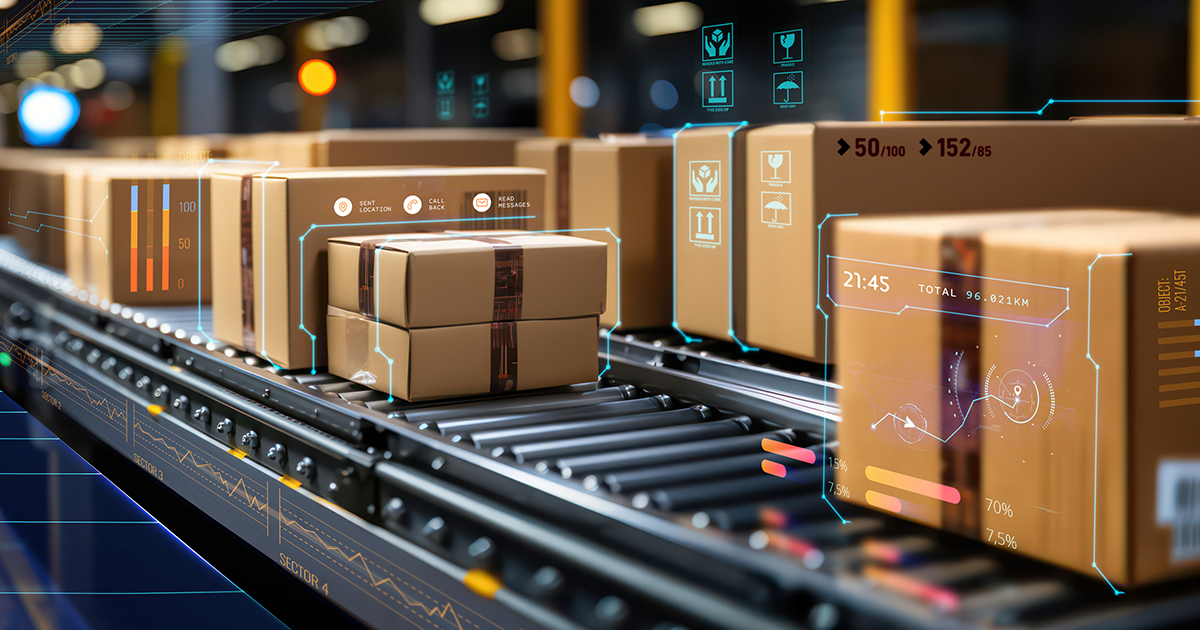
Manufacturing is constantly evolving. Today, labor shortages, rising customer expectations, supply chain volatility, advancements in technology and the pressure to reduce costs have accelerated the adoption of automation across the industry. At the heart of this evolution are developments in AIDC (Automatic Identification and Data Capture), a foundational technology that enables intelligent automation.
AIDC can collect and process data and information faster and more effectively than ever before. Understanding how AIDC enables automation allows manufacturing leaders to take a strategic approach to implementing automation, one that provides real benefits and efficiency gains.
Automation and AIDC in Manufacturing
Today, technologies like robotics, automated material handling, machine vision systems and integrated software platforms are providing real benefits to manufacturers.
The right automation system can boost the productivity of the workforce. Manufacturers can increase throughput without increasing labor. They can reduce production times and defects while improving worker safety and reducing operational costs.
However, automation alone is not enough to realize these benefits. Machines need data to know what they are processing, where items are located, and when actions should occur. That’s where AIDC becomes critical.
AIDC includes technologies such as:
- Bar codes
- RFID
- Machine vision systems
- Industrial scanners
- Mobile computing devices
- Labeling and print-and-apply systems
AIDC systems automatically collect the information, identify objects and capture data without manual entry. This real-time data feeds not only into systems like your ERP, MES and WMS, but also your automation control systems
Think of your AIDC systems as the eyes and ears for your automation systems. They provide the data and information the machines and software need to act intelligently. With AIDC, automation becomes dynamic, traceable, and data-driven.
Examples of AIDC Powering Automation
The most effective automation systems are tailored to the production environments where they operate. Rather than selecting a system and then finding a place for it, you should identify opportunities and then tailor the best solution.
That said, here are examples of how AIDC and automation can empower production.
Automated Workstation Verification
In assembly environments, operators scan components before installation. If the wrong part is scanned, the system alerts the operator and prevents errors. This integrates scanners, MES systems and automated workflow controls.
Print-and-Apply Labeling in Packaging
Automated labeling systems generate and apply labels in real time based on order data. Product data is collected and automatically checked against the order. Bar codes or RFID tags are verified immediately using vision systems, ensuring compliance and accuracy.
RFID-Driven Material Handling
RFID tags embedded in pallets or containers automatically trigger conveyor routing decisions in warehouses and production facilities. No manual scanning is required. Movement is driven entirely by automated identification.
Machine Vision for Quality Inspection
Vision systems identify defects, verify label placement or confirm component presence during production. These systems rely on accurate identification data to validate product configurations, with any quality or defects identified immediately before they cause a problem downstream.
Smart Inventory Replenishment
Bar code or RFID scanning at consumption points automatically updates inventory levels and triggers replenishment workflows within ERP systems. This prevents production delays for missing inventory or parts and allows workers to stay focused on higher-priority tasks.
The Benefits of Automation in Manufacturing
As powerful as AIDC-enabled automation is for manufacturing, before investing in any system it is critical to forecast the return and benefit. Depending on your solution, you can expect a mix of the following benefits.
1. Increased Production Efficiency
Automation reduces cycle times, eliminates manual data entry and minimizes bottlenecks. When integrated with AIDC, production systems can dynamically adjust workflows based on production data, shop floor situations, incoming orders and real-time inventory.
2. Improved Accuracy and Reduced Errors
Manual data entry is more likely to introduce errors that cascade through production and supply chain processes. AIDC eliminates keystroke errors and ensures accurate tracking of materials, components and finished goods.
3. Real-Time Visibility
The data collected by AIDC not only provides visibility for automation, but also for production managers. AIDC feeds live updates on work-in-progress, inventory levels and machine status. This enables proactive decision-making instead of reactive troubleshooting.
4. Enhanced Traceability and Compliance
In regulated industries such as automotive, aerospace and medical device manufacturing, serialization and lot traceability are critical. AIDC technologies ensure every component is tracked from receipt to shipment.
5. Labor Optimization
Automation doesn’t eliminate jobs, and it isn’t suited to every task in production. Instead, it shifts labor to higher-value activities. AIDC-equipped systems reduce the need for labor on repetitive, low-value tasks. With actionable data provided by AIDC, employees are empowered to focus on higher-value work.
A Strategic Approach to Implementing AIDC and Automation
Manufacturing continues to move toward Industry 4.0, where digital and physical systems operate in harmony. AIDC is the bridge between those two worlds.
Automation requires accurate, real-time data to work efficiently. Digital systems need a connection to the physical world. AIDC enables both. Together, automation and AIDC create a high-performance manufacturing environment built on visibility, accuracy and efficiency.
The rise of automation is not about replacing people. It’s about empowering operations with intelligent systems that drive measurable results and enabling your people to work smarter, faster and more efficiently.
At GO2 Partners, we help manufacturers design, deploy and scale AIDC solutions that align with operational goals and long-term growth strategies. If you're evaluating automation initiatives or looking to strengthen your data capture foundation, GO2 Partners can help you create a roadmap that turns technology into operational advantage.